


Hey there! As a supplier of special thick sheets, I often get asked about the density of these unique materials. So, I thought I'd take a moment to break it down for you and give you a better understanding of what goes into determining the density of special thick sheets.
First off, let's talk about what density actually means. In simple terms, density is the mass of an object divided by its volume. It's a measure of how much "stuff" is packed into a given space. For special thick sheets, density can vary widely depending on the material they're made from.
One of the most common materials we deal with is acrylic. Acrylic is a popular choice for special thick sheets because it's lightweight, durable, and has excellent optical clarity. The density of acrylic typically ranges from about 1.17 to 1.20 grams per cubic centimeter (g/cm³). This means that a 1 cubic centimeter block of acrylic would weigh between 1.17 and 1.20 grams.
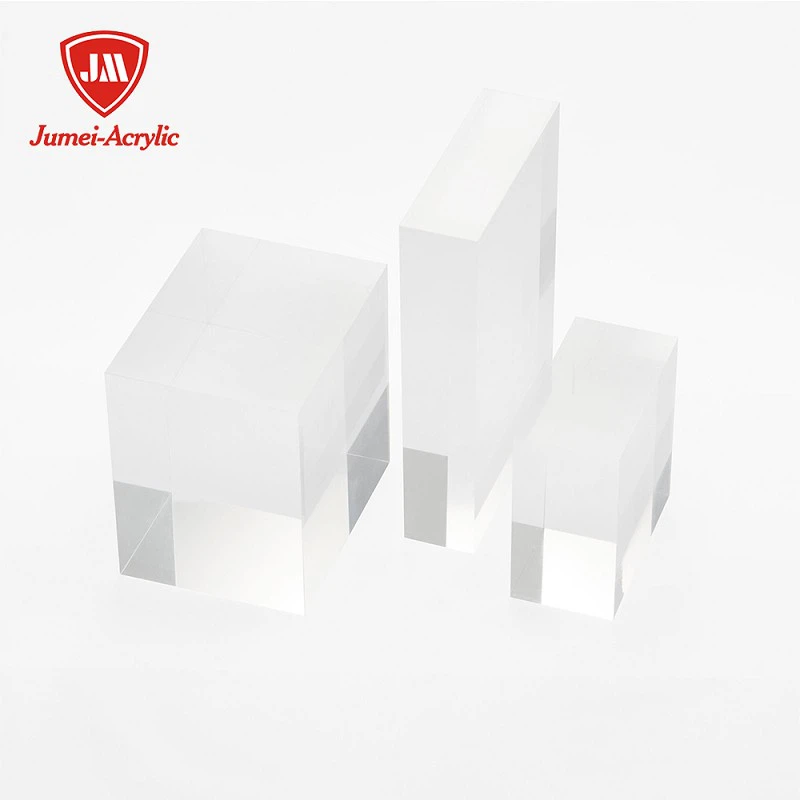
Now, let's say you're interested in a 2 Inch Thick Acrylic Sheet. The density of this sheet would still fall within that general range for acrylic, but the actual weight of the sheet would be much higher because of its greater volume. To calculate the weight of a 2-inch thick acrylic sheet, you'd need to know its dimensions (length, width, and thickness) and then use the density formula to figure out its mass.
But acrylic isn't the only material we offer. We also have special thick sheets made from materials like polycarbonate, glass, and metal. Each of these materials has its own unique density characteristics.
Polycarbonate, for example, is another lightweight and durable material that's often used in special thick sheets. It has a density of around 1.20 g/cm³, which is similar to acrylic. However, polycarbonate is known for its high impact resistance, making it a great choice for applications where the sheet might be subject to heavy use or potential damage.
Glass, on the other hand, is a much denser material. The density of glass can vary depending on its type and composition, but it typically ranges from about 2.4 to 2.8 g/cm³. This means that a glass special thick sheet will be significantly heavier than an acrylic or polycarbonate sheet of the same size.
Metal special thick sheets, such as aluminum or steel, have even higher densities. Aluminum has a density of around 2.7 g/cm³, while steel can have a density ranging from about 7.7 to 8.0 g/cm³. These materials are often used in applications where strength and durability are of the utmost importance.
So, why does the density of special thick sheets matter? Well, it can have a big impact on a few different things. For one, it affects the weight of the sheet, which can be important if you're transporting or installing it. A heavier sheet may require more manpower or specialized equipment to handle.
Density can also affect the performance of the sheet. For example, a denser material may be more resistant to impact or have better insulation properties. On the other hand, a lighter material may be more suitable for applications where weight is a concern, such as in aerospace or automotive industries.

When choosing a special thick sheet for your project, it's important to consider the density along with other factors like strength, durability, and cost. You want to make sure you're getting the right material for your specific needs.
If you're still not sure which material or density is right for you, don't worry! That's what we're here for. Our team of experts has years of experience in the special thick sheet industry, and we're happy to help you find the perfect solution for your project. Whether you're looking for a 2 Inch Thick Acrylic Sheet or something else entirely, we can provide you with all the information you need to make an informed decision.
We offer a wide range of special thick sheets in different materials, sizes, and densities. And we're committed to providing our customers with high-quality products at competitive prices. So, if you're in the market for special thick sheets, give us a shout. We'd love to talk to you about your project and see how we can help.
Just reach out to us, and we'll get the ball rolling. Whether you have a specific question about density or you're ready to place an order, we're here to assist you every step of the way. Let's work together to make your project a success!
References
- "Engineering Materials: Properties and Selection" by George E. Dieter
- "Materials Science and Engineering: An Introduction" by William D. Callister Jr. and David G. Rethwisch